DEVELOPMENT AND LEADERSHIP
HNS held the conference “Women in Football”
13.05.2026.
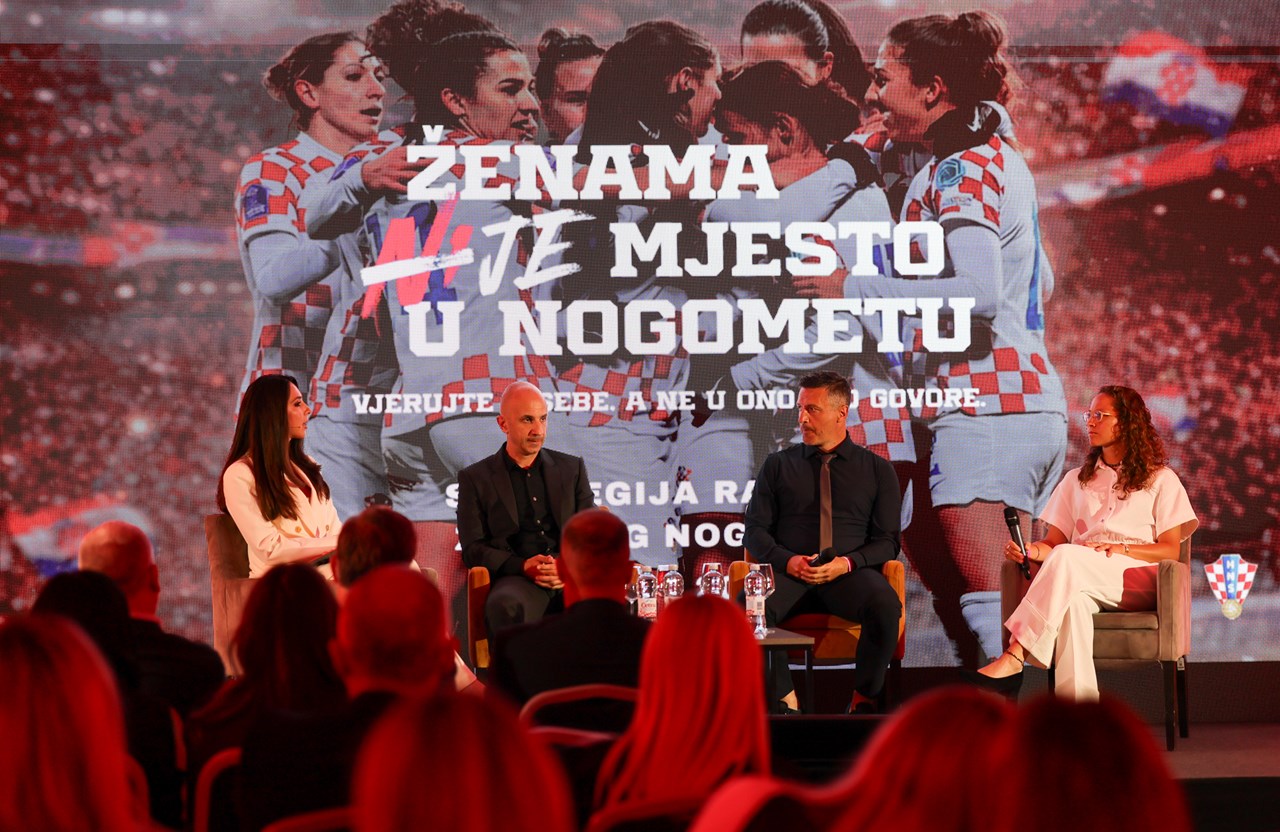
Photo by: Ivan Brajković
Organized by the Croatian Football Federation at Hotel Sveti Martin from May 12 to 13, the “Women in Football” conference brought together representatives of domestic and international sports institutions, female experts from the football system, representatives of UEFA and FIFA, and numerous participants from the world of sport, education, and management.
Over the two-day program, topics were opened covering the development of women’s football, strategic planning, leadership, equality, institutional support, and mental health in sport.
Opening of the conference
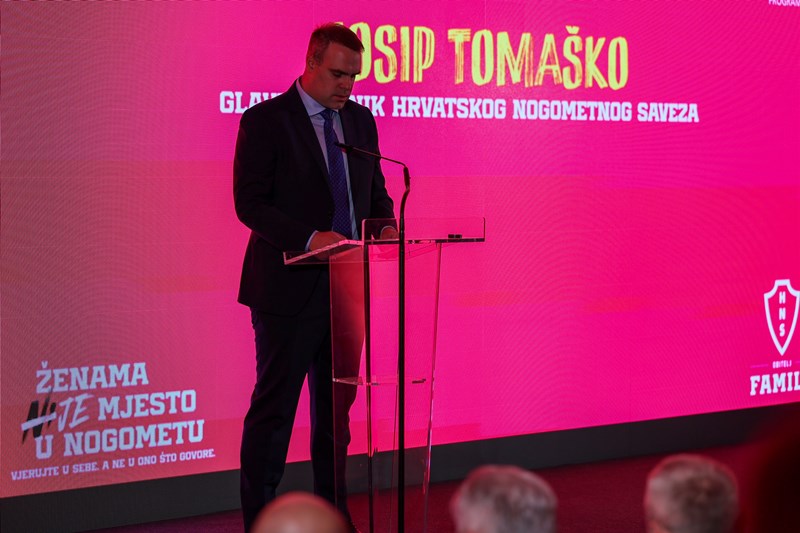
HNS Secretary General Josip Tomaško emphasized that the conference confirms that the development of football is not a matter of the future, but of the present.
“Football development is not only the future, it is the present, and I congratulate our experts who today presented the development strategy for the next four years. I believe we will achieve the set goals. Regarding women in football themselves – the first example is Iva Olivari, who is Deputy Secretary General and team manager of the national A team. There is also Ivančica Sudac, who holds a high position in UEFA, as vice-chair of an important UEFA committee for club licensing. As many as 60 percent of our office staff are women, and that is a beautiful story. With today’s conference we highlighted these things, and the exchange of experiences will give everyone an incentive to get involved in football and sport.
What I would also point out is that we want more girls to play football, and consequently we will have better results and players for the national team, as well as the development of U-15 and U-17 leagues, and soon junior leagues when they are introduced – all of this will give additional motivation to everyone.”
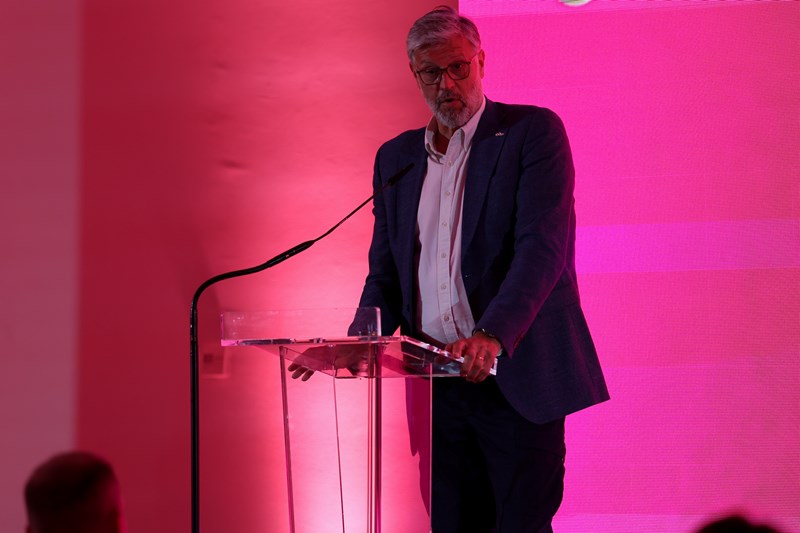
In his address, Dubravko Šimenc, former Olympian and water polo player, now an employee of the Croatian National Tourist Board responsible for strategic projects, emphasized the importance of such conferences in raising awareness of the role of women in sport and increasing their visibility and inclusion at all levels of the sports system.
FIFA strategy for women’s football
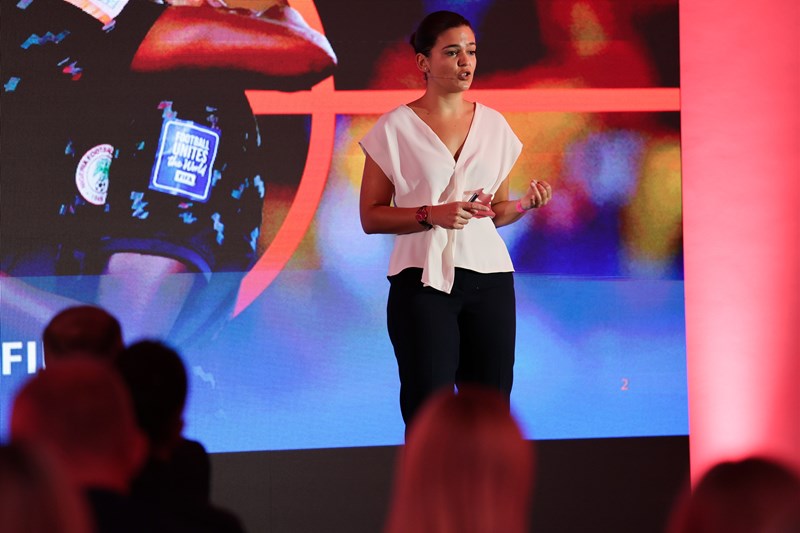
After the introductory part, a lecture was held on the FIFA women’s football strategy, led by Ada Bonilla Duarte, FIFA Project Manager for Women’s Football Development.
Speaking about the global development of women’s football and cooperation with national associations, she said:
“The program organized by the Croatian Football Federation is outstanding. It covers so many topics that I believe will truly define the direction of the future of women’s football in Croatia. I am very happy to be here and to have been invited to speak about FIFA’s women’s football strategy, our development programs, and how we work together to encourage and improve women’s football.
What I have seen over the past decade is enormous growth. The growth is really significant. There is still a lot of work to be done, but honestly, now is the right moment. The audience exists. It all comes down to leaders making decisions. And I am very happy to say that this is really happening at HNS. Steps are being taken that are necessary to further improve women’s football.”
HNS strategy for the development of women’s football
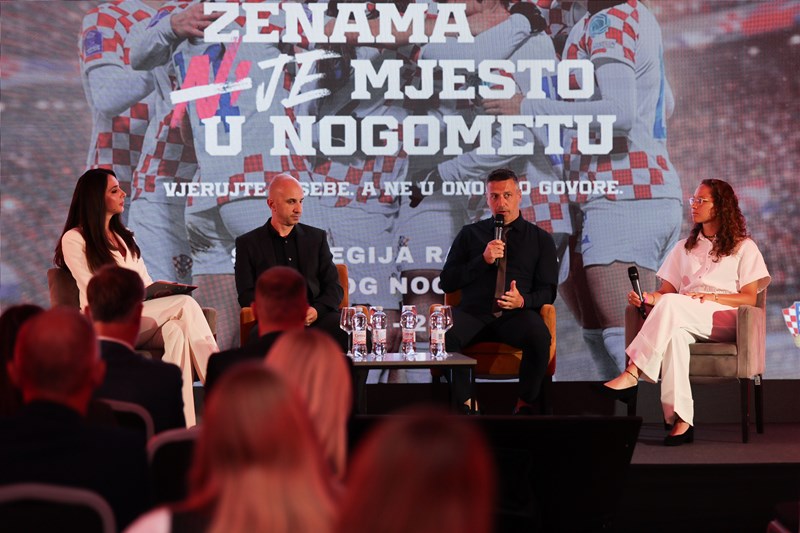
The next part of the program featured a panel discussion “Women’s Football Strategy,” where the HNS women’s football strategy up to 2030 was officially presented under the title “Women (Don’t) Belong in Football.”
Participants included Petar Krpan, chief instructor of HNS, Božidar Miletić, coordinator for women’s football at HNS, and Helenna Hercigonja Moulton, regional instructor of the Zagreb Football Association.
Speaking about the strategic development of women’s football in Croatia, Petar Krpan emphasized the importance of systematic work and long-term development:
“Women’s football today is no longer a question of potential, but of the quality of the system we are building around it. That is why the Croatian Football Federation has in recent years invested additional efforts in creating conditions for the long-term development of women’s football – from working with the youngest age groups and educating professional staff, to strengthening the competition system and developing clubs.
Our goal is to create an environment in which girls will have a clear development pathway, quality professional work, and the opportunity to remain in football long-term. A strategy only makes sense if its results are visible on the pitch, in daily work, and through real progress of the system. That is why conferences like this are very important, because they open space for concrete discussions, exchange of experiences, and joint reflection on the future of women’s football.”
UEFA perspective: development of people and equality of opportunity
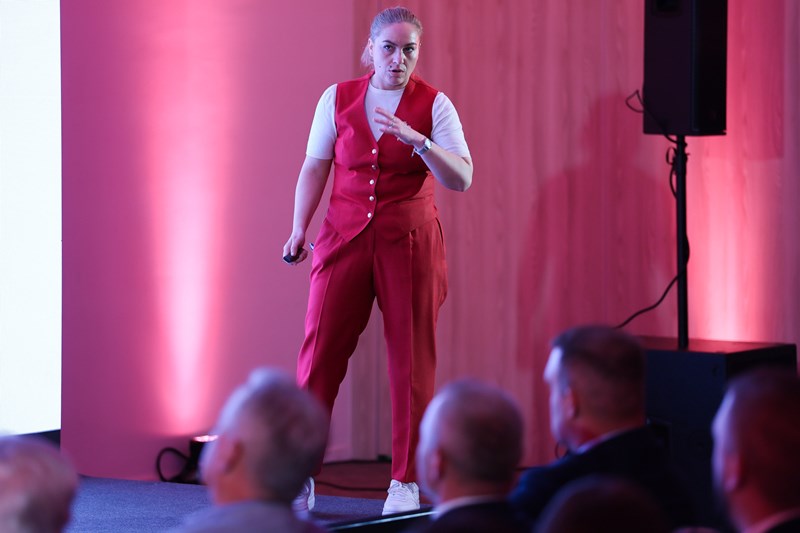
In the UEFA expert session, Nina Patalon, UEFA Elite Coach Expert and head coach of the Polish women’s national team, spoke about implementing women’s football strategy in everyday field work.
“What is important? People are important, because when you invest in the right people, they can bring a lot of inspiration, ideas, and success, because of course we work for success and for achieving the goals we are trying to reach.
And in my opinion, it is important to understand that women’s football matters. When you have a son and a daughter, you must treat them exactly the same, or at least give them the same conditions to try – to try to play football, to try everything – but give them equal opportunities.
That is why it is very important to understand that girls and boys have the same dreams, and we adults are responsible for creating the environment and conditions for that.”
Experience from the system: Iva Olivari
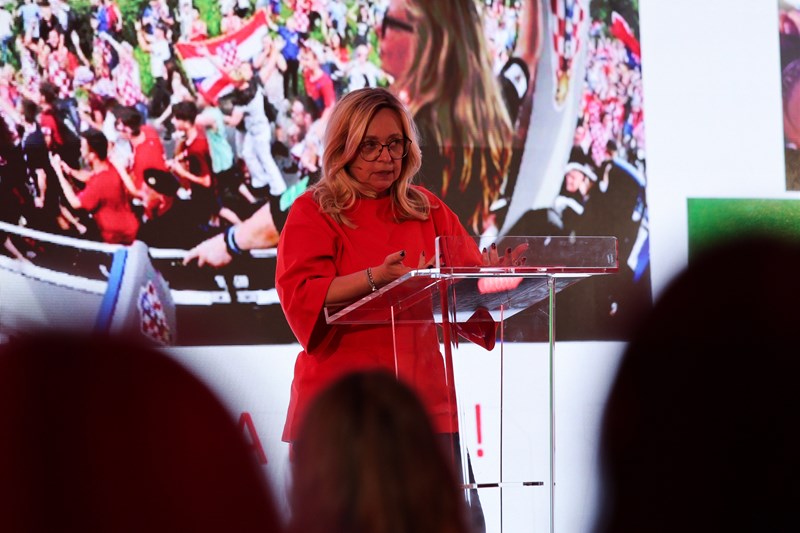
The afternoon part of the conference was opened by Iva Olivari, Deputy Secretary General of HNS and team manager of the Croatian men’s national team, with a lecture titled “How Women Can Build Authority in a Male Environment.”
Speaking about her professional path within the football system, she said:
“I believe that through my work I have proven that a woman can succeed and survive in a predominantly male environment. Women are present in football – I have been working since the early 1990s, and every club always had at least one woman from whom you could get answers to questions. So women are here, they are not going anywhere, and we simply have to fight for ourselves.”
Stipe Pletikosa, technical director of the A and U-21 national teams, also commented on the importance of continuous system development:
“The development of women’s football must be part of the overall development of Croatian football. It is important that we create a quality system, from working with the youngest to the national team level, but also a space in which women will have the opportunity to develop as coaches, sports professionals, and leaders within football.”
Global perspectives: culture, visibility, and opportunities
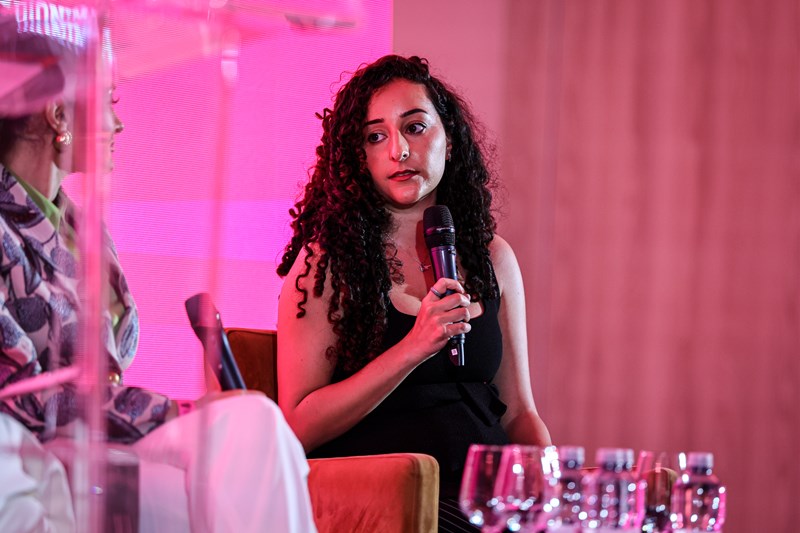
In the “Global Perspectives” panel, Zeycan Rochelle Yildirim, chief marketing director of FC Samsunspor and activist for gender equality through sport and business, and Çiğdem Türkan, expert in youth development, governance, equality, and stadium management, participated.
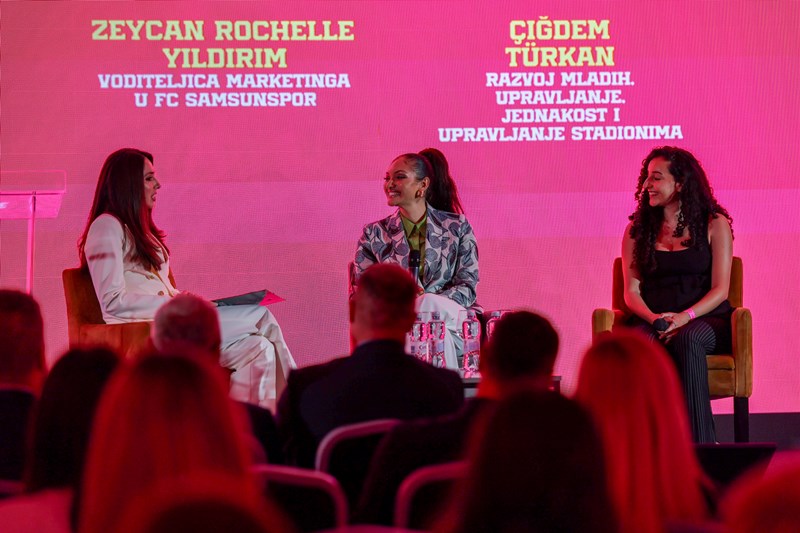
Zeycan Rochelle Yildirim emphasized the importance of institutional support and visibility of women in sport:
“What I like about HNS is that they normalize the work of women in football at all levels. For the first time, I entered a room and saw so many people who want to work in this industry. It is very important to have role models and representation, because that is how we increase women’s participation in football.”
Çiğdem Türkan spoke about authenticity and building a sustainable culture within sports organizations:
“It is important that women can be seen in different roles in football, because visibility creates new opportunities. And when you reach those positions, the most important thing is to stay true to your values and integrity. That is how sports culture changes in the long term.”
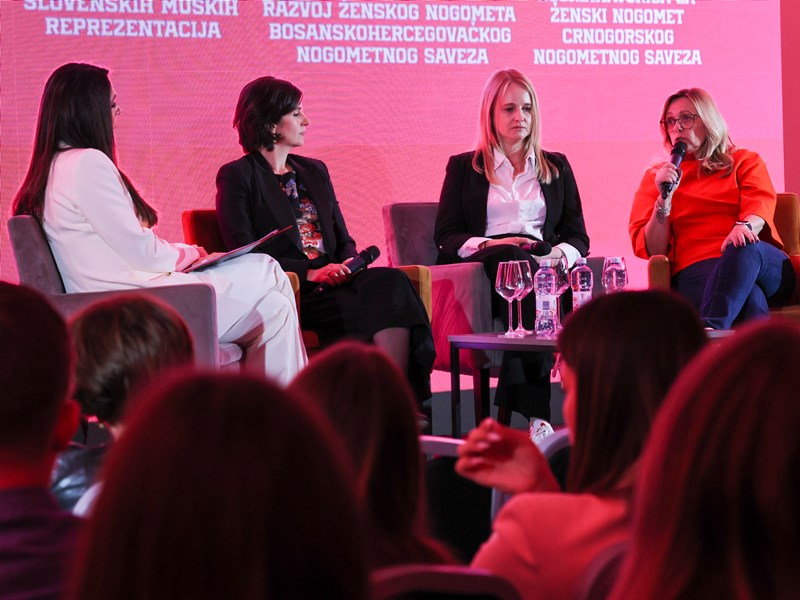
Panel: “Women (Don’t) Belong in Football”
The day concluded with the panel discussion “Women (Don’t) Belong in Football,” featuring Iva Olivari, Lea Soklič, team manager of the Slovenian Football Association men’s teams, and Nermina Hadžibajrić, coordinator for women’s football development at the Football Association of Bosnia and Herzegovina.
The participants discussed experiences of women within the football system, perceptions of authority, challenges of working in a traditionally male environment, and the changes needed to make football a more open and inclusive space for future generations of women in sport.
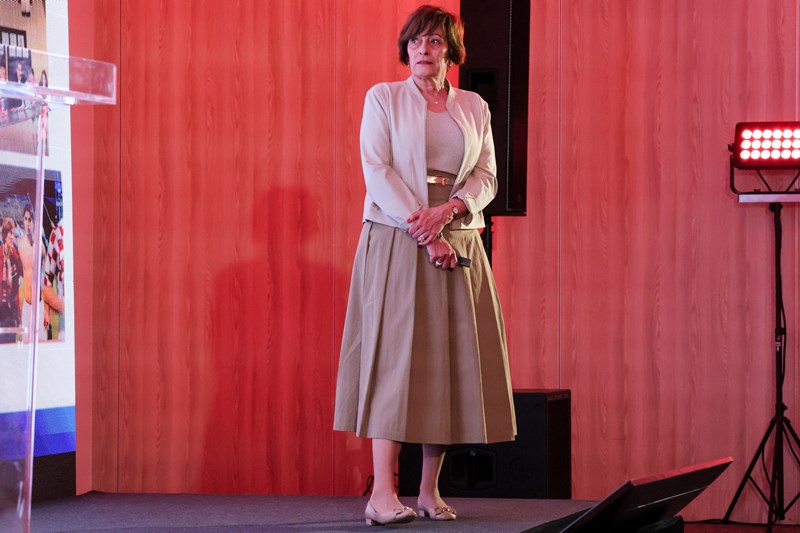
Second day of the conference
The second day focused on experience, systems, and the people who build sport daily from different perspectives.
The program was opened by Ivančica Sudac, head of the HNS Club Licensing Department, with a lecture titled “Lessons from My Path – Work, Opportunities, and Challenges in Football.” Through personal and professional experience, she spoke about the development of the football system, the challenges of working behind the scenes in sport, and the changes Croatian football has undergone in recent decades.
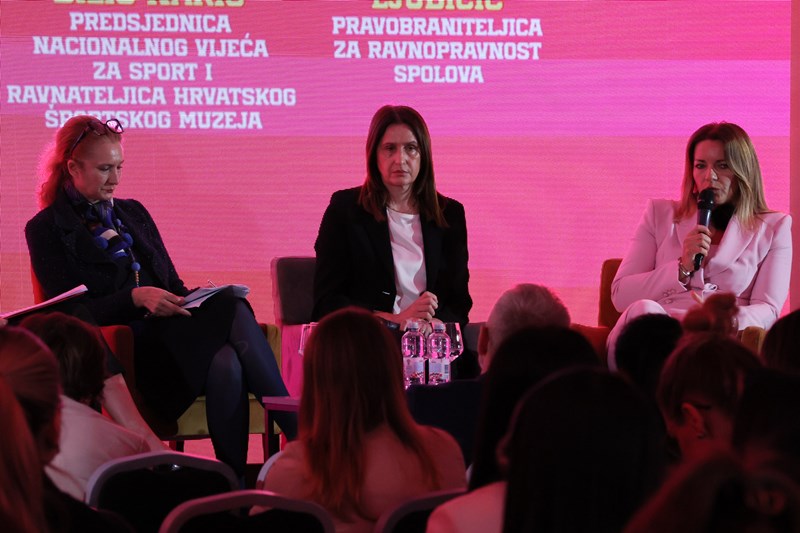
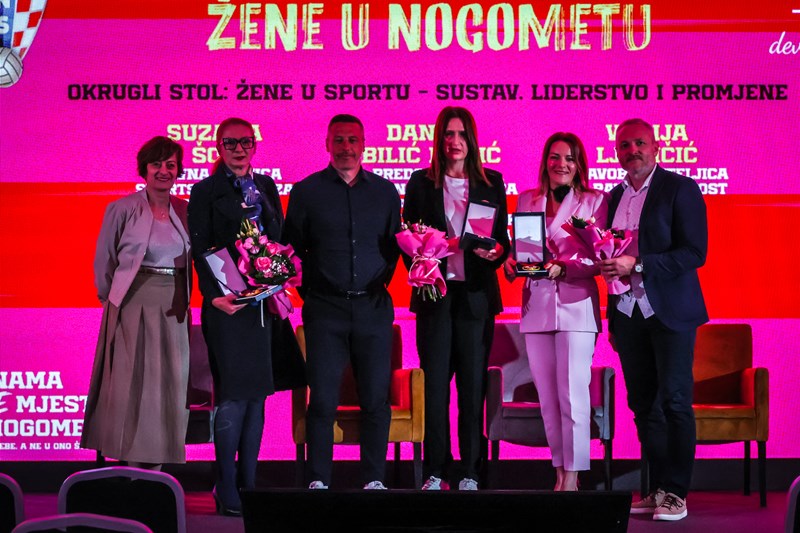
After the lecture, the panel “Women in Sport: System, Leadership, and Change” was held, dedicated to the role of women in sports institutions, decision-making, and system development. Participants included Suzana Šop, Secretary General of the Sports Association of the City of Zagreb, Danira Bilić Nakić, President of the National Sports Council and Director of the Croatian Sports Museum, and Višnja Ljubičić, Ombudsperson for Gender Equality. The discussion covered leadership, institutional support, equality, and the changes needed for sport to become a more inclusive and higher-quality system.
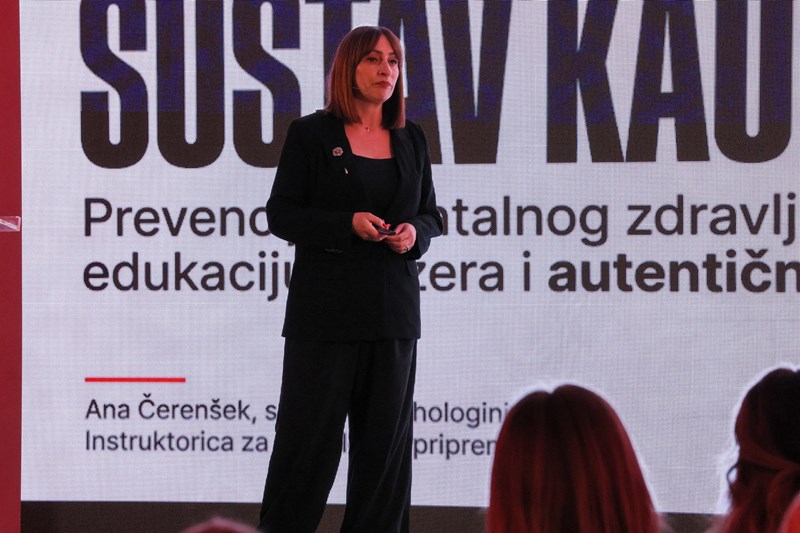
The final part of the conference featured a workshop by Ana Čerenšek, expert in mental training and psychological preparation of athletes, titled “The System as a Shield: Prevention of Mental Health Issues Through Education of Coaching Staff and Authentic Female Leadership.”
Through a practical approach and experience working with athletes and professional staff, the workshop addressed important issues of mental health in sport, the role of leadership, and the system’s responsibility toward the people operating within it.
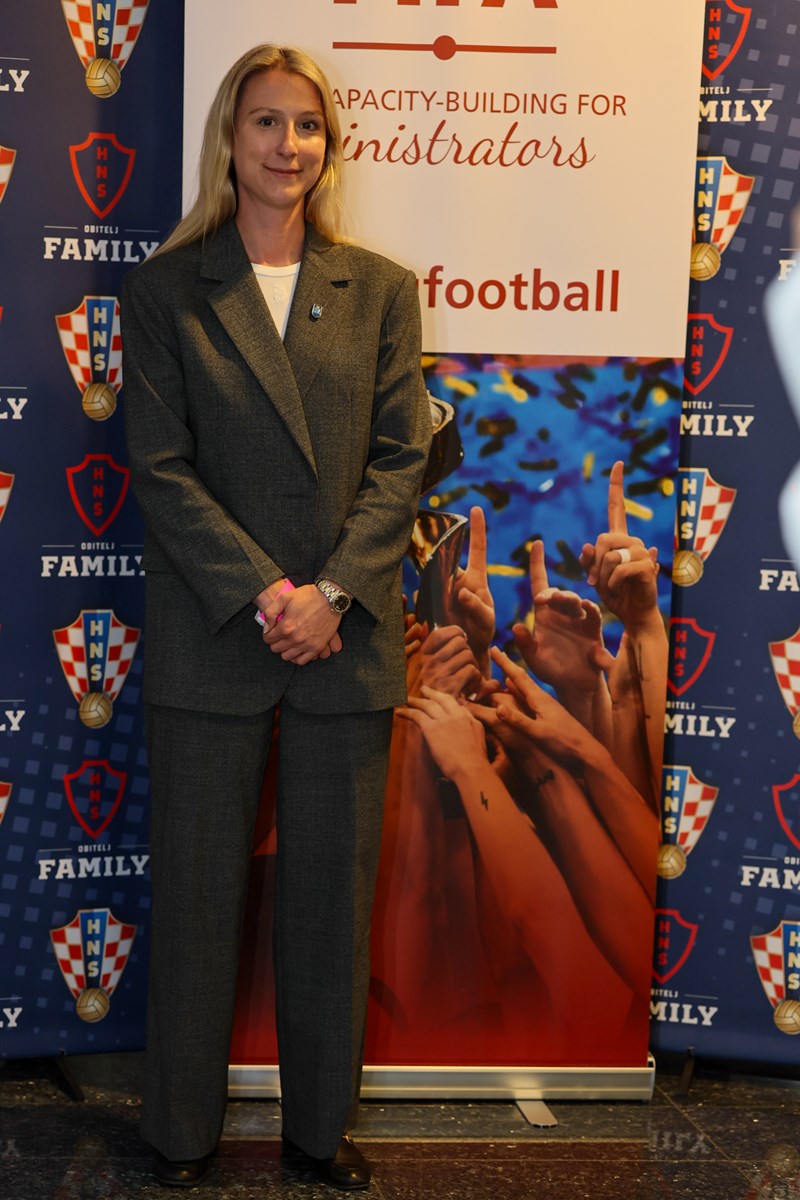
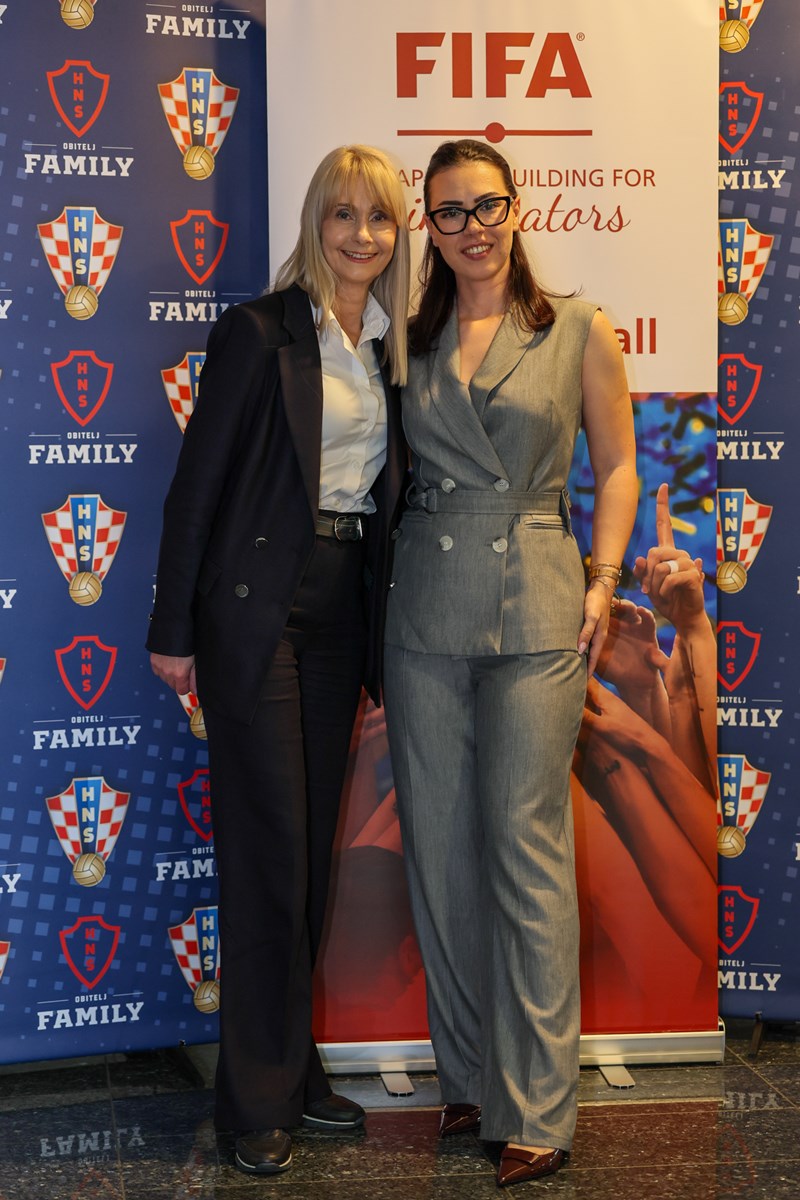
Among those present were prominent representatives of Croatian club football, NK Osijek president Alexandra Vegh and HNK Hajduk Split board member and marketing director Marinka Akrap.
Conclusion
The “Women in Football” conference showed that football development does not depend only on results on the pitch, but on people, systems, and decisions made off it. Over the two-day program, key questions about the development of women’s football were opened, as well as the broader sports system – from strategy and education to leadership and everyday practice in clubs and institutions.
It was emphasized that changes are already visible, but there is still room for progress, especially in strengthening structures, creating equal opportunities, and further involving women at all levels of sport.
The conference and panels were moderated by HNS media officer Ivona Hemen.
The conclusion of the conference is clear – women’s football and women’s sport in Croatia are no longer a topic of the future, but part of the current system that is actively developing. The next step is further strengthening cooperation, continuity, and concrete measures that will make this development sustainable.
Copyright by Croatian Football Federation. Quoting text from this article is granted subject to appropriate credit being given to HNS as a source and providing direct link to the original content at hns.family. Re-use of the photographs is not permitted.
- Latest
- Trending
Croatia defeated by Iceland: “The little things make the difference, and we need to work on them”
09.10.2026.
Croatia U-21 to face Germany in friendly at Rujevica
09.10.2026.
Tomaško and Pletikosa at UEFA TEP Meeting in Berlin
08.10.2026.
Croatia 14th in Latest FIFA Ranking
07.10.2026.
Gračan and Bačić: “There are always surprises in football”
07.10.2026.
Scoreboard
Next match

Nations League - Group A
England
Croatia
12.11.2026.
Table
Nations League - Group A
- 1.Španjolska4+712
- 2.Engleska4+119
- 3.Hrvatska4-103
- 4.Češka4-80